
What is it?
What Is Knee Arthritis?
Knee arthritis is a condition characterized by the deterioration and inflammation of the cartilage in the knee joint. Cartilage is the smooth, slippery tissue that covers the ends of bones, acting as a cushion and allowing the joints to move smoothly. In the knee, cartilage covers the end of the femur (thigh bone), the top of the tibia (shin bone), and the back of the patella (kneecap).
When this cartilage gradually wears away, the space between the bones narrows, leading to pain, stiffness, swelling, and difficulty in movement. Without timely and proper treatment, knee arthritis can progress to an advanced stage where bones begin rubbing against each other, causing severe pain and the formation of bone spurs.
At Clinic, we offer comprehensive knee arthritis treatment aimed at relieving pain, improving joint function, and preventing further joint damage. Prolonged cartilage deterioration can also contribute to knee deformities such as bow legs and knock knees, making early diagnosis and treatment essential for maintaining mobility and quality of life.
Type of Knee Arthritis
There are several types of knee arthritis that may require medical evaluation and treatment, depending on the severity of symptoms and the extent of joint damage. At Clinic, we provide specialized care for the following types of knee arthritis:
- Osteoarthritis – The most common form of arthritis caused by age-related wear and tear of the knee cartilage.
- Post-Traumatic Knee Arthritis – Arthritis that develops after a knee injury such as a fracture, ligament tear, or meniscus damage.
- Rheumatoid Arthritis – An autoimmune condition where the body’s immune system attacks the knee joints, causing inflammation and pain.
- Psoriatic Arthritis – A type of inflammatory arthritis associated with psoriasis that can affect the knees and other joints.
- Gout – A painful form of arthritis caused by the buildup of uric acid crystals in the knee joint.
- Pseudogout (Calcium Pyrophosphate Deposition Disease – CPPD) – A condition caused by calcium crystal deposits in the knee joint, leading to swelling, stiffness, and discomfort.
Early diagnosis and appropriate treatment can help manage symptoms, slow joint damage, and improve overall mobility and quality of life.
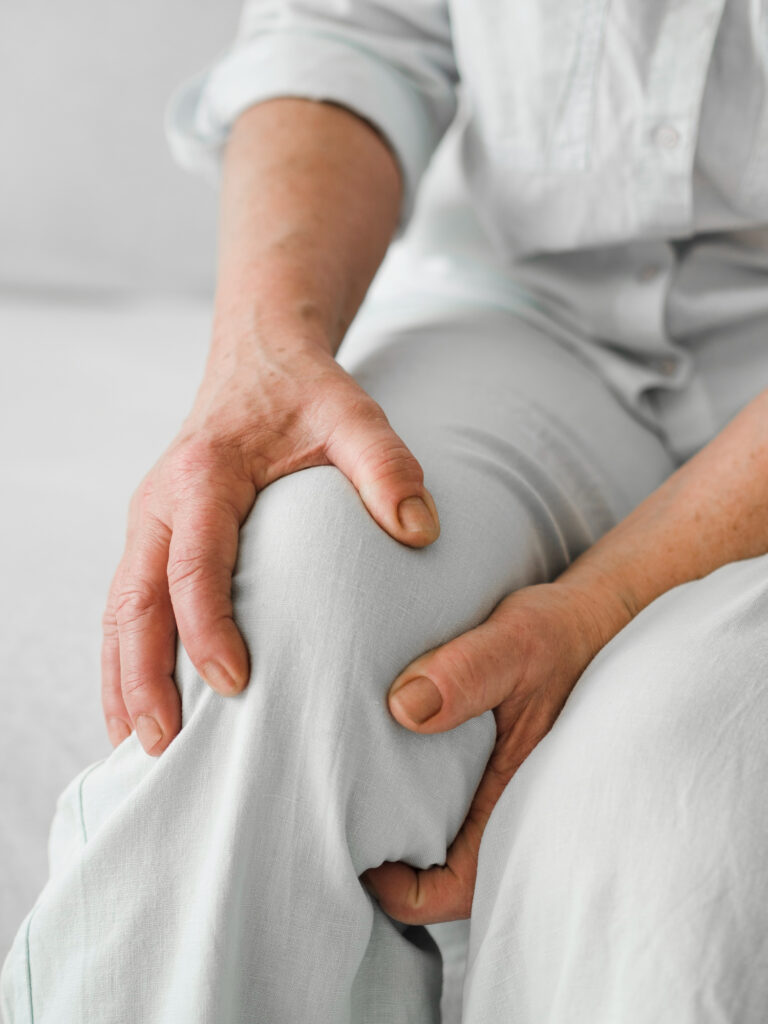
Risk Factors For Knee Arthritis
Common Risk Factors That Cause Knee Arthritis
- Age – Especially in the case of osteoarthritis, older adults are more susceptible to developing knee arthritis compared to younger individuals.
- Naturally Crooked Bones – If your bones or joints are naturally misaligned, it can increase the risk of arthritis over time.
- Gout – Untreated inflammatory arthritis, such as gout, may eventually lead to osteoarthritis.
- Knee Injuries – Even minor knee injuries, if ignored or left untreated, can contribute to the development of arthritis later.
- Excessive Stress on the Knees – Activities such as jogging, intense workouts, or sports can put repeated stress on the knee joint, damaging cartilage and increasing arthritis risk.
- Excess Weight – Being overweight places additional pressure on the knees, which can accelerate wear and tear and raise the risk of knee arthritis.
Major Symptoms Of Knee Arthritis
Seek medical attention for knee arthritis if you notice these symptoms worsening over time:
- Difficulty walking due to knee stiffness
- Grinding, clicking, snapping, or creaking sounds from the knees during movement
- Joint pain that worsens or changes with weather conditions
- Knee buckling or instability while standing or walking
- Swelling around the knees
- Warmth or increased temperature around the knee joint
- Locking or sticking sensation in the knees while moving
- Redness of the skin around the knee
- Gradually increasing knee joint pain that affects daily activities
Knee Arthritis Diagnoses And Treatment
Before starting knee arthritis treatment, the doctor will first diagnose the condition through a physical examination of the affected knee joint. Your medical history and the symptoms you have been experiencing will also be carefully evaluated. Understanding what makes the pain better or worse helps the doctor determine whether the discomfort is due to knee arthritis or another underlying issue.
Depending on the severity of the condition, knee arthritis treatment may include medications, physiotherapy, weight management, lifestyle modifications, or surgery in advanced cases. The doctor will recommend the most suitable treatment plan to relieve pain, improve mobility, and restore the normal function of your knee.
ACL Tear
ACL tears are commonly seen in athletes, fitness enthusiasts, and individuals involved in intense physical activities. If you or your loved ones have suffered an ACL injury, the experts at Clinic can help ensure a safe and effective recovery through advanced ACL tear treatment and surgery.
Our ACL tear treatment approach combines experienced orthopedic care with modern surgical techniques and advanced equipment to restore knee stability, improve mobility, and help patients return to their daily activities with confidence.
What Is An ACL Injury?
An ACL injury refers to a sprain or tear of the anterior cruciate ligament (ACL), one of the major ligaments that connects the thigh bone (femur) to the shinbone (tibia). This ligament plays a crucial role in maintaining knee stability. Excessive force or sudden strain on the ACL can cause it to tear, often requiring proper ACL tear treatment.
ACL injuries commonly occur during sports activities, intense workouts, sudden changes in direction, abrupt stops, jumping, or hard landings. Many people experience a distinct “pop” sound or popping sensation at the time of injury. This is usually followed by severe pain, swelling, knee instability, and difficulty bearing weight on the affected leg, making walking challenging.
The treatment for an ACL tear depends on the severity of the injury. Mild ACL injuries may heal with adequate rest, physiotherapy, and rehabilitation. However, complete or severe tears often require ACL reconstruction surgery to restore knee function, stability, and mobility effectively.
Types Of ACL Tears
ACL tears are classified into three grades based on the severity of the ligament injury. The treatment approach for each grade varies depending on the extent of damage and knee instability.
Grade 1 – Mild ACL Injury
This is the least severe type of ACL injury and usually involves stretching or spraining of the ligament without an actual tear. Patients may experience mild pain, swelling, and discomfort, but the ligament is still able to maintain knee stability.
Grade 2 – Moderate ACL Injury
Grade 2 injuries involve a partial tear of the ACL. In this condition, the ligament becomes excessively stretched and loose, reducing its ability to stabilize the knee joint properly. Patients may experience pain, swelling, instability, and difficulty during movement or physical activity.
Grade 3 – Severe ACL Injury
This is the most serious and most commonly seen type of ACL tear. It involves a near-complete or complete rupture of the ligament, often splitting it into two parts. The knee becomes highly unstable and unable to bear proper support, making walking and physical activities difficult. Grade 3 ACL tears usually require immediate medical attention and often need surgical reconstruction for effective recovery.
Causes of ACL Tear
Here are some of the major causes of an ACL tear that may require medical attention:
- Abruptly slowing down and changing direction while running
- Pivoting on a firmly planted foot
- Landing awkwardly after a jump, placing excessive pressure on the knees
- Suddenly stopping while running
- Receiving a direct and forceful blow to the knee
- Sudden collisions during sports activities such as football or basketball
- Falling from a height, such as a ladder, causing excessive stretching of the ACL
Symptoms of ACL Tear
Some of the most common symptoms of an ACL tear include:
- A “popping” sound or popping sensation in the knee at the time of injury
- Severe knee pain
- Rapid swelling around the knee joint
- Inability of the knee to bear weight properly
- Tenderness around the affected area
- Difficulty walking or moving the knee
The severity of symptoms may vary from person to person depending on the extent of the injury. If you experience any of these signs, even without severe pain, it is advisable to consult an ACL injury specialist for proper evaluation and treatment.
Common Risk Factors For ACL Tear
Risk Factors for ACL Tear
Certain factors can increase the likelihood of suffering an ACL tear. Some of the most common risk factors include:
Gender
Females are generally at a higher risk of ACL injuries compared to males due to hormonal influences, muscle strength differences, and variations in body anatomy.
Playing High-Impact Sports
Participating in sports such as football, basketball, gymnastics, and downhill skiing increases the risk of ACL tears because of sudden movements, jumping, pivoting, and rapid direction changes involved in these activities.
Faulty Body Movements
Incorrect movement patterns, such as bending the knees inward during exercises like squats or landing improperly after a jump, can place excessive stress on the ACL and increase the risk of injury.
Improper or Tight Footwear
Wearing footwear that does not provide proper support or restricts natural movement may increase strain on the knees, contributing to a higher risk of ACL injury.
Diagnosis For ACL Tear
It is advisable to consult a doctor as soon as you notice even mild symptoms of an ACL tear. Early diagnosis and timely treatment can help prevent further damage to the knee joint and improve recovery outcomes.
Before recommending the most suitable ACL tear treatment, the doctor will carefully assess the severity of the injury by examining the stability, tenderness, range of motion, and overall function of the affected knee. Your medical history, symptoms, and the circumstances surrounding the injury will also be taken into consideration to ensure an accurate diagnosis and personalized treatment plan.
Treatment For ACL Tear
ACL tear treatment depends on several factors, including the severity or grade of the injury, the doctor’s clinical examination, the patient’s age, activity level, medical history, and overall knee condition.
To accurately diagnose the injury, the doctor may initially recommend an X-ray to rule out any bone-related damage or fractures. In many cases, an MRI scan is advised to get a detailed view of the ligament, surrounding tissues, and the extent of the ACL tear. These investigations help the doctor determine the most effective treatment plan for recovery and knee stability.
Meniscus Tear
A meniscus tear is a common knee injury that can significantly affect mobility and day-to-day activities. It occurs when the meniscus — the protective cartilage that cushions the knee joint — gets torn due to excessive pressure, twisting movements, or sudden strain on the knee.
At Clinic, we offer comprehensive and reliable meniscus tear treatment under the care of highly skilled and experienced orthopedic specialists. Our treatment approach focuses on accurate diagnosis, pain relief, faster recovery, and restoring optimal knee function with advanced orthopedic care.
What Is Meniscus Tear?
The meniscus is a C-shaped piece of cartilage in the knee that acts as a cushion between the thigh bone and shinbone. It helps absorb shock, stabilize the knee joint, and protect the bones from excessive wear and tear during movement.
A meniscus tear occurs when this cartilage gets damaged due to sudden twisting movements, excessive pressure on the knee, sports injuries, or age-related degeneration. In some cases, a torn piece of cartilage may break loose and get trapped within the knee joint, causing the knee to lock or restrict movement.
Common symptoms of a meniscus tear include pain, swelling, stiffness, discomfort while walking, and difficulty fully straightening or extending the knee. Patients may also experience a sensation of the knee getting stuck or blocked during movement.
Mild meniscus tears can often be managed with conservative treatment such as rest, ice application, medications, and physiotherapy. However, more severe tears may require specialized meniscus tear treatment, including minimally invasive surgical procedures, to restore proper knee function and mobility.
Causes Of Meniscus Tear
A meniscus tear can occur during rigorous physical activities that force the knee to rotate, twist, or bend beyond its normal range. Sudden stops, quick turns, and aggressive pivoting movements are among the most common causes of meniscus injuries, especially during sports and high-impact activities.
The condition may also develop while lifting heavy objects, kneeling awkwardly, or performing deep squats that place excessive pressure on the knee joint. In older adults, age-related degenerative changes in the knee cartilage can weaken the meniscus, making it more prone to tearing even during routine activities.
Meniscus tears are frequently associated with sports such as basketball, football, tennis, cricket, and other activities that involve rapid movement, twisting, and sudden directional changes. Depending on the severity of the injury, proper meniscus tear treatment may be required to relieve pain, restore mobility, and prevent further knee damage.
Symptoms Of Meniscus Tear
If you suffer a meniscus tear, the symptoms may not appear immediately, especially in the case of a minor injury. In many cases, visible symptoms can take up to 24 hours to develop.
Some of the most common symptoms of a meniscus tear include:
- Swelling or stiffness around the knee joint
- A popping sensation at the time of injury
- Pain while moving the knee, especially during twisting or rotating movements
- Difficulty fully straightening or extending the knee
- A sensation of the knee getting stuck, locked, or stiff during movement
- A feeling that the knee may “give way” or become unstable while walking
If the swelling continues to worsen, does not improve with rest, or if you experience persistent pain and restricted knee movement, it is important to consult a doctor for proper evaluation and meniscus tear treatment.
Meniscus Tear Treatment
Meniscus tear treatment depends on several factors, including the size and location of the tear, the patient’s age, activity level, and the presence of any associated knee injuries. During diagnosis, the doctor carefully evaluates these factors to determine the most suitable treatment approach.
The outer portion of the meniscus, known as the “red zone,” has a good blood supply and may heal naturally if the tear is small or mild. However, the inner portion, called the “white zone,” receives very little blood supply, making healing slower and more difficult. Tears in this area often require closer medical attention and specialized treatment.
Fortunately, not all meniscus tears require surgery or extensive treatment. If the knee remains stable, does not lock during movement, and symptoms gradually improve, conservative management may be enough for recovery.
Here are some effective ways to support and speed up recovery from a meniscus tear:
- Rest the affected knee and avoid putting excessive pressure on it
- Apply ice packs regularly, ideally every 3–4 hours, to reduce swelling and pain
- Use an elastic bandage or neoprene knee sleeve for compression and support
- Keep the knee elevated with the help of a pillow to minimize swelling
- Take anti-inflammatory medications as advised by the doctor
- Avoid high-impact activities such as running, jumping, or twisting movements that may worsen the injury
Seeking timely medical evaluation is important if pain, swelling, instability, or restricted movement continues despite conservative care.